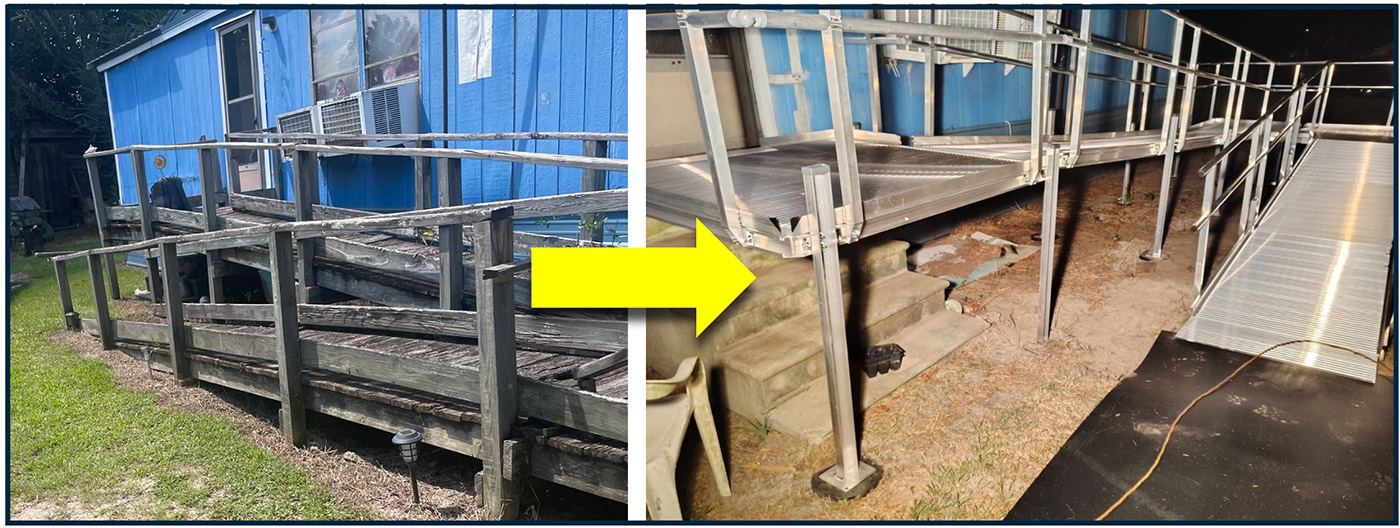
Wanting to save a quick buck on ramps can be a dangerous choice. DIY wheelchair ramps run the risk of being unsafely installed, and wood ramps in particular can eventually become structurally unsound.
So, what are the dangers of homemade ramps, and what easy, stress-free alternatives can bring safety and peace of mind to your home?
Most Common DIY Ramp Mistakes
Many DIY wheelchair ramps fail not because of intent, but because small technical mistakes quickly turn into safety hazards.
Wrong ramp slope
If the ramp is too steep, it becomes unsafe not only for wheelchair users, but for mobility scooters, walkers, and even caregivers. On the other hand, a too shallow ramp will become long and unstable. As most DIY builders don’t follow ramp codes, such as ADA ramp slope guidelines, they might end up with a ramp that looks fine, but is actually dangerous to use.
Not being properly load-bearing
Ramps must be able to carry not just the user, but the caregiver, the wheelchair or walker, and what’s called “dynamic load” – the added load when a person leans forward or backward. Many DIY wheelchair ramps are built with undersized lumber, poorly spaced joists, or insufficient fasteners, all of which can lead to sagging, shifting, or – worst case scenario – collapse.
Lack of proper anchoring
Once you start using a DIY wheelchair ramp, it can become unsafe very quickly. Wooden ramp safety in particular can decline fast, but why?
DIY ramps often come loose over time and begin to wobble. A ramp can’t just “sit” against a porch or a step. To be safe, every ramp needs to be securely anchored, with proper lateral bracing and support posts that are set correctly.
The Added Risks of Wood Ramps
When comparing wood vs aluminum ramp safety, wood presents several long-term risks. Not only is it prone to weather damage, it can also present long-term challenges and even liability issues.
Weather damage
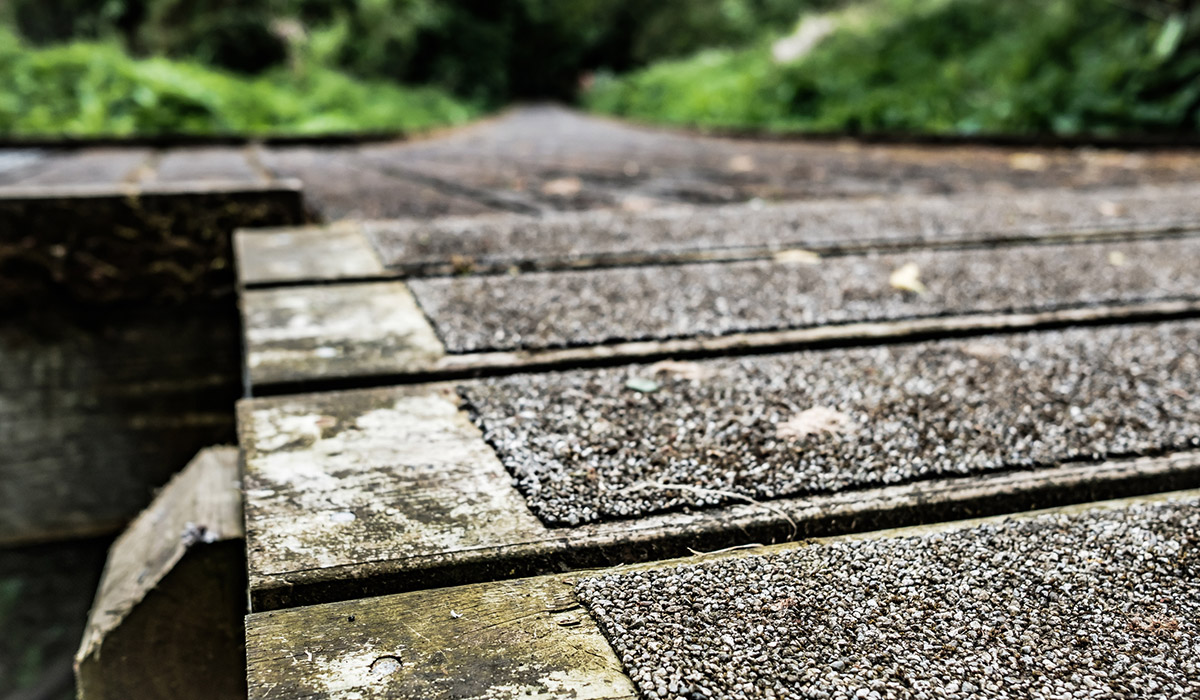
Wood expands, contracts, and warps. Rain creates soft spots. Snow and freeze cycles create cracks. Sun dries wood out and makes it brittle. Even pressure-treated wood deteriorates outdoors unless it’s constantly maintained.
Slippery surfaces
When wet, wood becomes infamously slippery. As the wood ages, it’s more prone to algae, mildew and frost, increasing the hazards further. Some of these dangers can be mitigated by using anti-slip paint, but that tends to wear off in high-traffic zones, and it needs regular reapplication.
Rot and insect damage
Being exposed to moisture and weather conditions on a daily basis can lead to the wood ramp starting to rot, which gradually creates structural weak points. This in turn can lead to high-risk failures and injuries. If you’re in an area where termites and carpenter ants are common, these might also accelerate the process – especially near the ground or in shaded areas.
Fastener failure
As the wood swells and shrinks, nails and screws loosen over time. Even the best fasteners risk rusting when exposed to moisture. This can lead to unsafe handrails or flexing boards, or even outright structural failure.
Maintenance and lifespan
Wood ramps require sealing and repairing regularly. This can include replacing boards, renewing anti-slip coatings, or securing handrails. Without constant upkeep, wood ramps stop being safe. This is why, in examples like aluminum vs wood ramp safety, aluminum is frequently mentioned as a point of contrast. Even the most perfectly built wooden ramp has a shorter lifespan than a material that won’t rot or break down over time.
Wood ramps demand regular staining, sealing, and repairs just to stay structurally sound. For many homeowners, replacing their wood ramp becomes a far more practical option, offering better long-term safety and reliability with less maintenance. But don’t underestimate the technical side of ramp safety – doing it yourself can introduce the same safety issues that made the old ramp fail. If you want a ramp that stays safe for years, it’s worth having an installer handle the work. It saves time, prevents costly mistakes, and most importantly, gives you peace of mind.
At National Ramp, we’re always happy to connect you with a certified installer from our nationwide network. Reach out anytime for a free ramp consultation, and we’ll walk you through every step to make sure your home is as safe and accessible as it should be.
FAQ
Are wooden ramps safe for long-term use?
Wood ramps can be safe at first, but they require constant maintenance to stay that way. Weather, moisture, and wear weaken the ramps over time, which makes it harder to guarantee long-term safety.
Why are homemade ramps risky?
DIY ramps often don’t follow ramp codes such as ADA guidelines, meaning they don’t follow the proper slope, load-bearing, or anchoring standards. Even if they look sturdy, these mistakes can create a wobbly, sagging, or structurally unsound ramp that puts users at risk. This guide explains how to avoid ADA ramp mistakes at home.
How long does a wood ramp last?
A wood ramp typically lasts from a couple of years up to about a decade, but the lifespan depends on both climate and upkeep. Keeping up with maintenance, such as sealing and repairs, is crucial to ramp safety. Neglect can shorten the ramp’s lifespan significantly.
What is the safest alternative to a DIY or wooden ramp?
The safest alternative to a DIY or wooden ramp is a professionally installed aluminum wheelchair ramp. Aluminum ramps are engineered to meet proper slope and load-bearing requirements, don’t rot or warp over time, and require little to no maintenance. Because they’re designed for long-term use and changing weather conditions, they provide more consistent safety and reliability than homemade or wooden ramps.
Don’t Risk Injury To You Or A Loved One
Why wait? Give us a call at 877-596-7293 or contact us online to get started!